
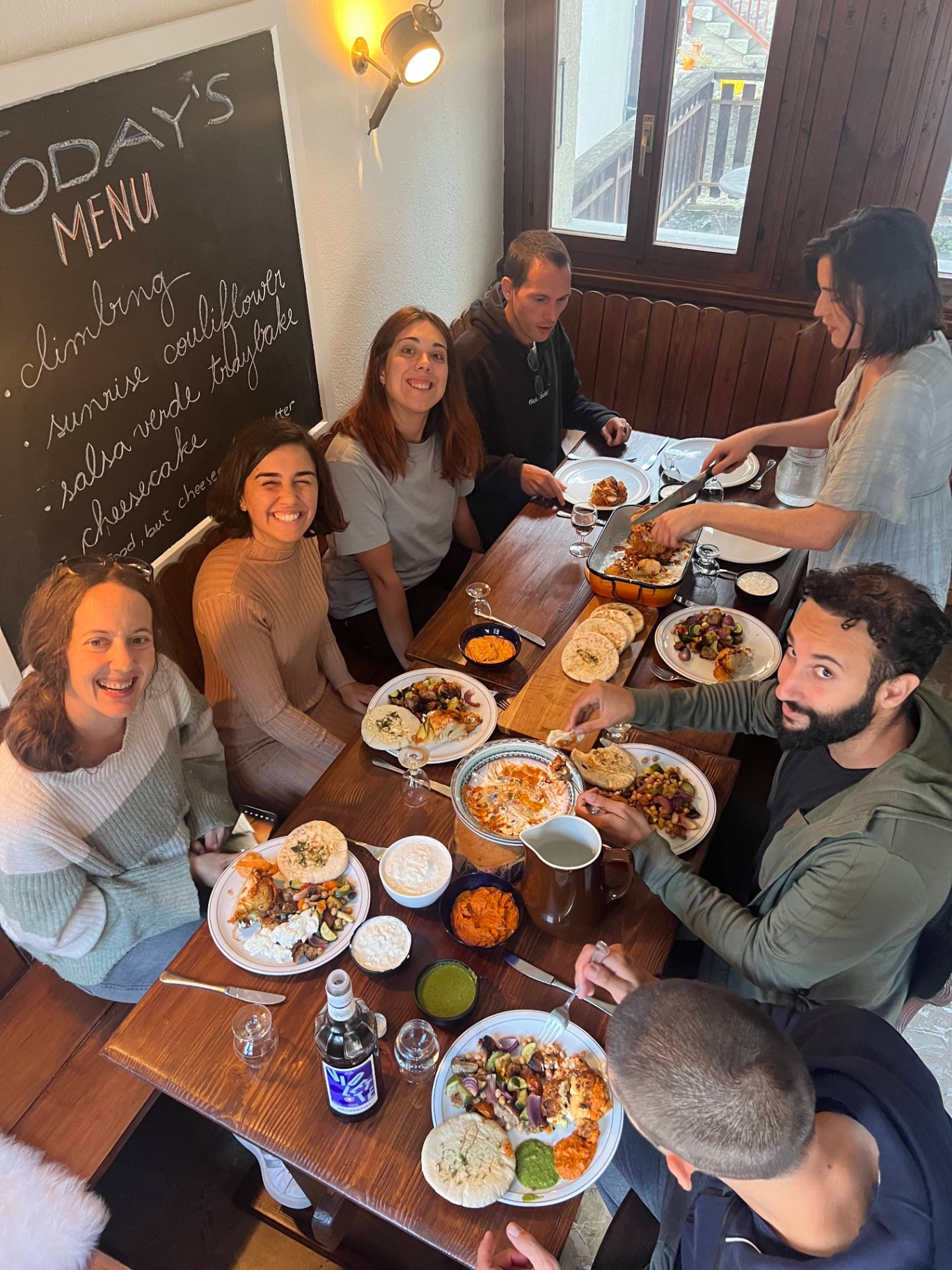
@@@reymon359 and I spent 3 weeks at Alpiness Coliving and we experienced a tight-knit community 🤗
There were two key differences from other colivings we have been: Working together to create the coliving and having family dinners almost every day 🤤
But, how does the organization work? 🤔
Every Thursday after dinner, we planned out the week.
Starting with food, each of us chose a day to cook 👩🍳👨🍳, and paired up to make it easier. Typically, we had 5 dinners per week, leaving the weekend free.
One cool thing? Each person covered the cost of one dinner, so no need for daily calculations with colivers.
After sorting out the dinners, came the work 💪. A list of tasks awaited our attention.
From small chores like fixing knobs on wardrobes to painting the entire ceiling. We formed groups, helping out when someone finished early.
The last thing was fun time! 🎉
@@benoit and @@@fabienneluisier proposed villa activities with locals: Swiss Day celebrations, international festivals, and village parties 🥳.
Other colivers suggested skillshares – salsa, Irish dance, AI workshops, and more. And thanks to mountain enthusiasts @@@vlad and @@@austris, we had hikes, climbing, and via ferrata adventures each week ⛰.
Some of our culinary adventures included raclette, chili, risotto, poke, tiramisu, cheesecake, and more! Not to mention, a plethora of activities to keep us engaged with the community 🤹.
As the house nears completion, there's no need for work on it. However, coliving owners are brainstorming on villa enhancements, even considering a communal garden to grow some veggies 🌱
I think the key to a good community is spending time together. Eating meals together makes it easier to establish connections with others (although it can challenge your personal habits) and working all together towards one goal makes the activities more enriching.
As a nomad, I find it fulfilling to feel that I'm part of something that will stand the test of time ✨